
 By
Key Takeaways
- An intense, anomalous spring weather pattern triggered dangerous severe storm activity across the Four Corners region.
- According to meteorologists at FOX Weather, parts of western and central New Mexico were placed under a Tornado Watch for the first time in 28 years.
- Northeastern Arizona communities, including sections of Apache and Navajo counties, faced hazardous wind gusts, isolated hail, and rapidly shifting desert atmospheric conditions.
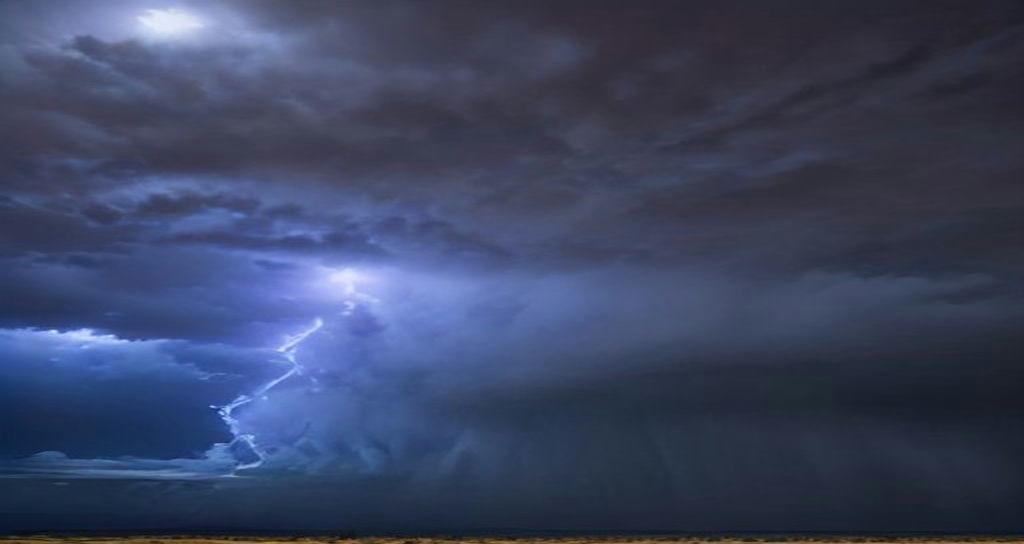
A volatile weather system spanning the high-desert plateaus of the American Southwest unleashed an exceptional burst of severe convective storms across the Four Corners region this week. The uncharacteristic setup created an extraordinary meteorological milestone across the state line, where forecasters issued a regional Tornado Watch for portions of New Mexico that had not seen such an alert in nearly three decades.
According to initial reporting from FOX Weather, the Storm Prediction Center escalated severe weather risks throughout the intersection of Arizona, New Mexico, Utah, and Colorado as deep moisture interacted with aggressive upper-level winds. The event marked the first time since 1996 that federal forecasters deemed conditions over the specified regional sectors ripe enough for rotating updrafts and tornadic development.
Atmospheric Instability Over the High Desert
Severe weather setups of this magnitude are notoriously uncommon in the Intermountain West. The Four Corners topography, characterized by expansive mesas, arid basins, and elevations frequently exceeding 5,000 feet above sea level, typically inhibits the boundary-layer humidity and concentrated low-level wind shear required to spawn tornadic supercells.
Meteorologists tracking the system through FOX Weather noted that a powerful Pacific low-pressure trough pulled an unusually robust plume of subtropical moisture northward. When combined with intense diurnal heating over the parched plateaus, the atmosphere destabilized rapidly, resulting in explosive storm towers capable of producing destructive wind shear, large hail, and localized rotational signatures.
Impacts Along Arizona’s Eastern Border
While the epicenter of the tornado watch boundary settled primarily across western New Mexico, the peripheral dynamics triggered significant turbulence for northeastern Arizona. Residents across Apache and Navajo counties, as well as vast stretches of the Navajo Nation, encountered turbulent microbursts, blowing dust that dramatically reduced travel visibility along state corridors, and localized cloud-to-ground lightning clusters.
County emergency management officials throughout eastern Arizona placed localized response crews on alert status, advising highway motorists traveling along Interstate 40 and U.S. Route 191 to remain cautious of sudden visibility drops caused by wind-driven dust channels immediately preceding the storm fronts.
A Historic 28-Year Meteorological Anomaly
The issuance of a Tornado Watch in this quadrant represents an exceptional rarity for modern weather operations. Historical archive records cited by FOX Weather confirm that almost three decades had passed since atmospheric profiles aligned in this specific manner over the rugged terrain, underscoring the unusual strength of the mid-spring dynamic low tracking over the Western United States.
High-altitude desert storms typically manifest as “dry” microburst events – where precipitation evaporates before striking the earth, driving severe straight-line winds outward. However, the presence of substantial low-to-mid-tropospheric dew points during this event altered storm morphology, enabling cells to remain surface-based far longer than usual.
Frequently Asked Questions
Why are tornadoes so rare in the Four Corners region?
The Four Corners region features high elevations, rugged terrain, and typically dry desert air. Tornado generation demands rich low-level moisture, persistent heat, and substantial directional wind shear – conditions that are common in the Great Plains but rarely align over the elevated Southwestern plateaus.
Did Arizona issue tornado warnings during this storm event?
While the formal Tornado Watch designated by the Storm Prediction Center was concentrated primarily east of the Arizona state line in New Mexico, northeastern Arizona experienced severe thunderstorm watches, damaging wind advisories, and isolated hail alerts associated with the exact same frontal system.