
 By
Key Takeaways
- Senior federal officials conducted an on-site operational review of an Arizona Customs and Border Protection (CBP) commercial cargo facility.
- Discussions centered on modernizing screening infrastructure to counter illicit contraband while accelerating legitimate cross-border commerce.
- The tour highlights Arizona’s strategic position as a vital conduit in the multi-billion-dollar international supply chain between the U.S. and Mexico.
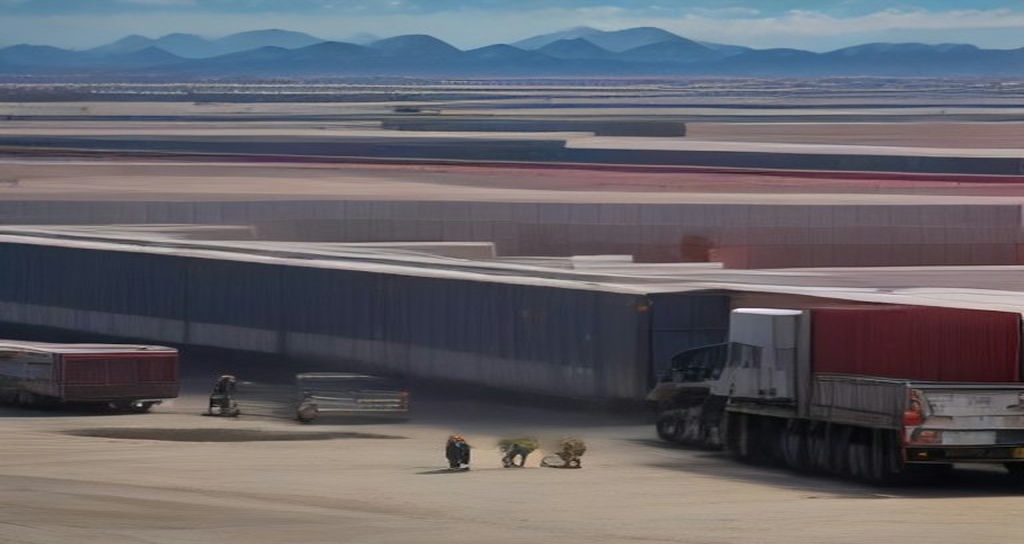
Senior federal leadership convened in southern Arizona this week to survey ongoing operations at a critical U.S. Customs and Border Protection cargo processing facility. The high-level delegation focused on assessing physical infrastructure, field officer staffing, and the integration of non-intrusive inspection technology designed to protect domestic supply chains.
According to official details released by Homeland Security (.gov), the delegation examined the complex balance between strict contraband interdiction and the rapid clearance of commercial freight that fuels both regional and national economies. Arizona’s international land ports serve as key economic arteries, handling millions of commercial freight entries and billions of dollars in bilateral trade annually.
Evaluating Advanced Cargo Screening and Interdiction Tech
During the walkthrough, officials observed live inspections and received briefings on the utilization of drive-through imaging systems, portal monitors, and specialized canine teams. Federal border agencies have faced mounting pressure to augment surveillance against synthetic narcotics, specifically fentanyl and methamphetamine, which criminal cartels frequently attempt to conceal within commercial shipments.
As documented in updates published by Homeland Security (.gov), federal leadership reinforced their commitment to supplying frontline CBP officers with the logistical tools necessary to intercept hazardous substances without stalling lawful cargo. Enhanced Multi-Energy Portal (MEP) systems and advanced machine-learning scanning tools have increasingly become standard at major southwestern entry points, giving inspectors detailed cross-sectional views of commercial trailers in seconds.
Streamlining Arizona’s International Commerce
Beyond security protocols, the operational visit illuminated the economic stakes tied to port-of-entry efficiency. Arizona’s trade corridors, linking manufacturing clusters in Sonora, Mexico, with American markets, depend on predictable border processing. Any prolonged bottleneck at commercial checkpoints ripples through regional supply chains, impacting logistics networks, produce distributors, and automotive assembly lines throughout the Southwest.
State trade advocates have long emphasized the need for ongoing federal investment into commercial ports such as Mariposa in Nogales and the commercial crossings in San Luis and Douglas. Expanding operational lanes, upgrading digital customs clearance paperwork, and retaining seasoned screening personnel are critical elements frequently highlighted by regional industry stakeholders.
Strategic Priorities for Southwestern Border Ports
The on-the-ground review in Arizona signals sustained federal focus on border modernization under national trade and homeland defense directives. Agency administrators spent time engaging directly with supervisory port directors and line-level officers to identify logistical bottlenecks, equipment servicing timelines, and working condition enhancements.
By reinforcing federal oversight at southern Arizona facilities, authorities aim to reassure commercial trade partners of the durability and safety of the international trade corridor. The visit also comes as Congress continues to weigh long-term appropriations aimed at modernizing land ports of entry across the southern border.
Frequently Asked Questions
Why are Arizona CBP cargo facilities central to national supply chains?
Arizona’s ports of entry facilitate the movement of billions of dollars in fresh produce, manufactured parts, and consumer goods moving between Mexico and the United States, making rapid, secure processing indispensable to everyday retail and industrial sectors nationwide.
What technologies are being expanded at border cargo inspection stations?
CBP has increasingly deployed non-intrusive inspection (NII) technologies, such as drive-through radiographic scanners and automated optical character readers, which permit thorough interior scans of full commercial tractor-trailers without requiring manual offloading.